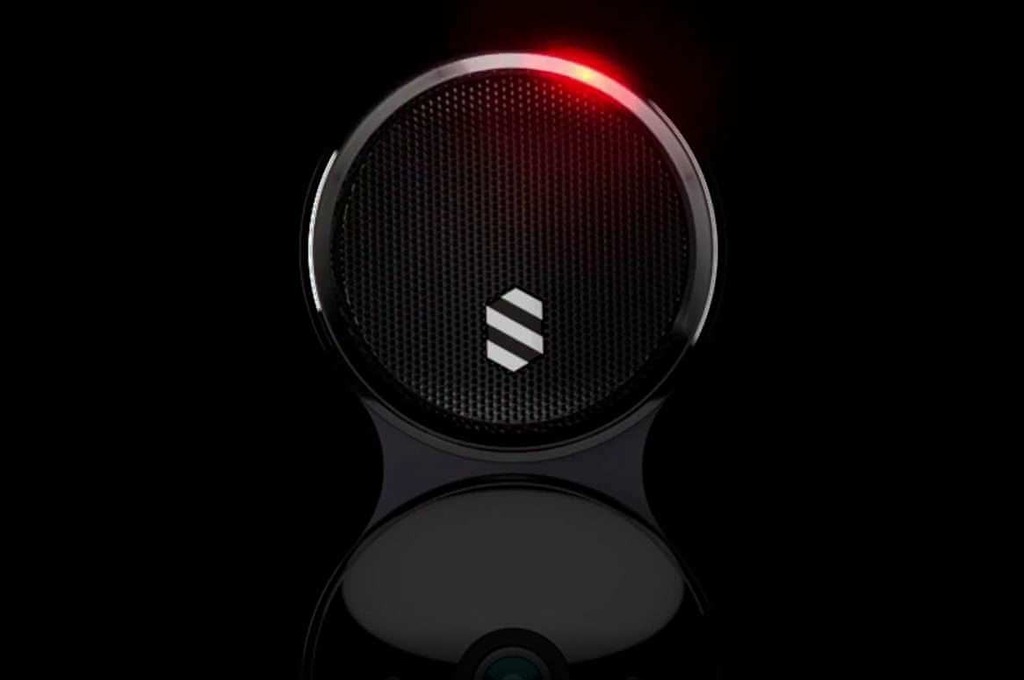
According to statistics, robberies during vacation time see a nearly 11% spike. After all, nothing is more inviting for thieves than an empty home, right? If it were up to us, we’d plant personal guards outside our house 24/7, but that’s not possible, of course. However, the Deep Sentinel home security system is the next best thing we could have gotten for our home. This proactive home security system combines human intervention and AI to keep watch over our homes. The result is an effective home security system featuring live monitoring through their “Sentinel Guards.” Nearly 19% of homeowners across the United States rely on third-party security systems for home monitoring. However, what makes Deep Security a cut above the rest is its ability to take action before crimes happen.
In fact, co-founder David Selinger designed the security system after hearing of a serious break-in in his neighborhood. However, the priority is on crime prevention via real-time human intervention thanks to AI-powered detection. The brand’s product and service line might have a lesser variety as compared to its peers, but the live Sentinel Guards easily won us over. To that end, here’s a detailed look at Deep Sentinel and why we rely on it when we’re off on our travels.
Also read: Keeping your house safe when you go away on vacation.
What Is The Deep Sentinel Home Security System?
Deep Sentinel has a unique take on home security. Usually, home security systems end up only documenting crime. What happens generally is an intruder triggering cameras when they breach the home’s perimeter, with the camera then recording what’s happening. It might even send you notifications, set off local sirens, or allow you to scream at the intruder through the sound system. However, everything happens so quickly that the entire incident is over before you can even get a sense of what went on.
Most professionally monitored home security systems usually don’t react until intruders have already entered your home, having tripped motion, window, or door sensors inside. So, to not needlessly waste police resources and produce false alarms, professionals monitoring usually first try to contact us, or with the next contacts on our list, to ask if we know what’s going on at our home. While they do call law enforcement eventually, the deed is done in the meantime.
What makes Deep Sentinel different from its fellow home security systems is that they notify suspicious activity to professionals whose entire job is to monitor and deal with it eventually. What’s more, the system uses a two-way audio to hail potential intruders and thieves and order them to leave the place, calling police dispatchers if and when needed.
See on:
How Does Deep Sentinel Work?
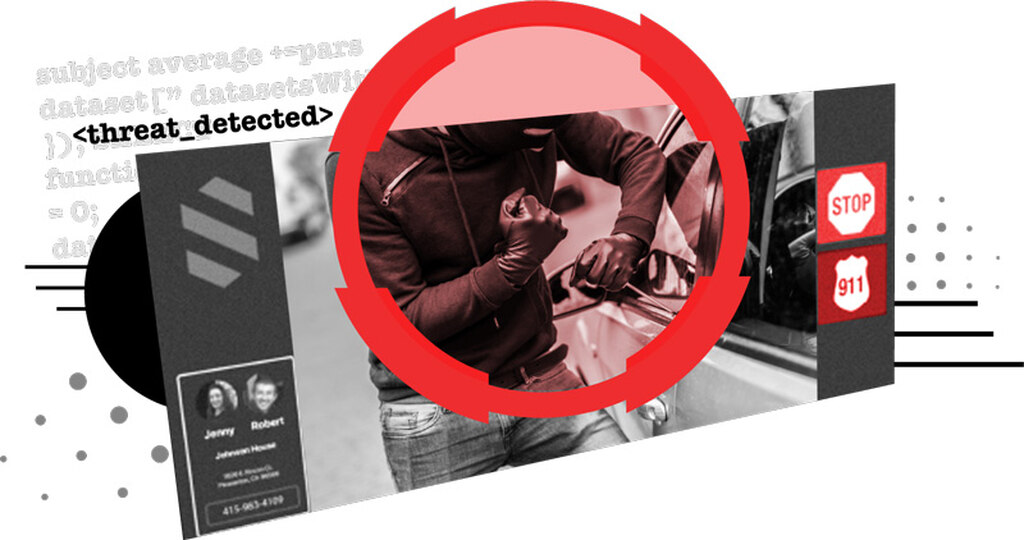
Deep Sentinel‘s starter pack comprises three wireless, battery-powered cameras that draw a perimeter around our homes. What’s more, a team of Deep Sentinel “guards” can remotely access every camera’s live feed. If and when they detect any movement from cars, animals, people, and other things around or on our home, the system’s AI algorithms try to determine which activities are fishy and which aren’t.
If and when they deem something dubious, the camera then turns on a ring of strobing red lights and even begins recording a video (a copy is saved to the local hub on our home network). Moreover, it also sends a live feed to a professional Deep Sentinel agent, whose job is to monitor the activity and decide whether they need to take action or not. For instance, someone taking packages definitely warrants a response, while someone simply delivering packages shouldn’t require any action. If the agent decides to intervene, they can either ask intruders what they’re doing via the camera’s two-way speaker or activate its in-built 104-decibel siren to scare intruders.
These two options are usually enough to prevent any potential crimes. However, when intrusions escalate into actual crimes, agents could even notify the local police, and most importantly, give them accurate descriptions of the intruder and the details of the suspected crime.
See on:
What’s Included With The Deep Sentinel Setup?
Next, let’s see what products the Deep Sentinel kit includes. Besides the hub, the kit comes with four rechargeable batteries, three cameras, and three camera mounts. What’s more, it also had a screwdriver, mounting hardware, an Install Box with mounts, a power cable with an extender (optional), a Connect Box with an ethernet, a yard sign, and window stickers.
Hub
The Deep Sentinel hub comes with 64GB of flash memory and 4GB of RAM and acts as a charging station for the cameras’ batteries. In fact, the one we purchased came with one additional battery, so we could charge it via the hub and even reduce downtimes by immediately replacing depleted batteries. What’s more, the hub is also where all the AI action takes place. For instance, our hub could distinguish harmless events from potential threats, such as kids biking on the sidewalk. So, we didn’t have to worry about getting a whole host of notifications that didn’t warrant any action. Our “Deep Sentinel” Guards (more on them later) were able to livestream our home footage, too. Are you worried about privacy? Deep Sentinel uses cameras that are outdoor-only.
Cameras
Since it’s a camera-based security system, our expectations from Deep Sentinel were high, and we weren’t disappointed. In fact, we had a thrilling time testing the cameras as we stayed in a place where folks would be around during the daytime, including a whole host of delivery folks.
What’s more, the advertised 1080p HD video quality held up on the mobile app, too. Thanks to the 130-degree viewing field, we could see a lot more so-called blind spots in our front yard, including the sidewalk. Even though we hardly spoke with anyone (since the Sentinel Guards would step in all the time), we liked the cameras’ two-way audio when we tested it. In fact, we even reviewed past activities on the app and discovered that the guards had quickly intervened and prevented potential package theft on our porch.
Last but not least, there are 16 infrared sensors. So, we had absolutely no issues viewing anything that caused any noises at night. The strobing and bright red-and-white alarm lights rimming the cameras’ lenses were also more noticeable at night, and hence worked as visual deterrents too. All this, coupled with the in-built, 104-decibel alarm siren, made sure that intruders had and would continue to have a very difficult time just coming to our front door without being noticed.
See on:

Setting Up The Deep Sentinel Hub
As we mentioned earlier, the Deep Sentinel kit came with three security cameras with 130-degree viewing field, 2-way audio, night vision, and 1080p resolution. What’s more, the kit also included window stickers and a lawn sign indicating Deep Sentinel’s presence on our property, three mounting brackets, and a hub and its power cable.
Initial Setup
Firstly, we downloaded the Deep Sentinel apps on our phones, as they guided us through the process of setting up the system. Then, we connected the hub to our router using an Ethernet cable before powering it on. Please note that the hub needs to be installed centrally indoors, so all three Deep Sentinel wireless cameras can reach it. In fact, the manufacturer recommends placing the hub on your home’s second story (if there’s one), or at least 7-8 ft off the ground. When your hub begins and finishes the process of being connected, a green LED blinks on the hub’s front.
Mounting The System
The Deep Sentinel Kit includes four batteries, one for every camera, and it even includes a spare. We needed to charge the spare battery by putting it inside the hub, with the other three batteries packed with their respective mounts and cameras. After we placed the batteries in the cameras and powered them on, it took around half a minute for the cameras to connect to the hub.
Will you be mounting the cameras on wooden surfaces? You’ll only need the screwdriver supplied by Deep Sentinel. However, if you’re installing them in your home’s stonework or brickwork, then you’ll require a drill too. Every mount requires just a single screw for installation, with three pressure touch points at the back holding it in place against the wall. We just needed to slide the mount’s arm up to expose the screw hole, screw it in place, and slide it back down. We could even slide the camera easily on the mount and lock it with a single click. Even removal was similarly quick and easy by pressing a quick-release button and sliding it off. The best bit? The mount had a fixed-pressure ball joint that allowed us to set any angle on the automatic camera, holding it in place.
Setting Up The Deep Sentinel System
After we installed every camera, the app prompted us to set up “protection zones” of up to 10 meters (around 30 feet). For this, we had to shape a boundary box around the area we wanted the system to monitor. What makes this step critical is that any activity in this area would alert Deep Sentinel agents, so we wanted to ensure that our coverage area extended down our walkway but didn’t reach the sidewalk.
During the setup process, we also entered our contact information and home address for local law enforcement. With that information, Deep Sentinel agents would be able to get the appropriate first responders to the correct location if a crime were to happen. The last step was “agent validation,” where we stood in front of the camera and made an “A” formation with our arms over our heads. Then, a Deep Sentinel agent responded over our speaker to confirm that our system was up and running.
Once our Deep Sentinel system was live, we could check in at any time using the app. The home screen provided most of the details we needed to know, including the name of the agent currently monitoring our feed, a carousel of recent events, and the connection status of our cameras.
See on:
How many cameras can the Deep Sentinel hub support?
Every Deep Sentinel hub can support up to as many as six Deep Sentinel cameras.
Do I have to sign a contract with Deep Sentinel?
Yes, users need to sign a one-year contract agreement with Deep Sentinel when they sign up for their service. Even then, users still have an option to go through a 30-day free trial period.
How quickly does Deep Sentinel respond?
The average response times with Deep Sentinel are 20-30 seconds, which might very well be the fastest in the industry. Also, LiveSentinel guards can even verify crimes-in-progress, so the police are more likely to take it seriously and respond on time.
Some images on this article are copyrighted by Deep Sentinel.
