
Are you a digital nomad hunting for cheap rental cars that can keep up with your location-independent lifestyle? Finding the right car rental company is one of those decisions that sounds simple but carries real consequences. Rent from the wrong company and you’re stuck with hidden fees, inflexible policies, and a booking impossible to deal with. Rent from the right one and you’ve got reliable wheels, transparent pricing, and a loyalty program that rewards you every time you hit the road. And a name that comes up often is Europcar for digital nomads, especially in Europe, South Africa, and Australia.
With a presence in over 140 countries and thousands of pickup locations, it’s one of the most geographically accessible rental brands in the world. But how does it actually stack up against competitors like Hertz, Sixt, Enterprise, Budget, and Avis when you’re renting cheap cars for extended road trips? This article breaks it down across six key areas that matter most to nomadic travelers. Whether you’re working from your laptop in Lisbon or navigating country roads in New Zealand, here’s what you need to know before you book.
Also read: How to Book Cheap Car Rentals With Europcar.
Global Availability
6
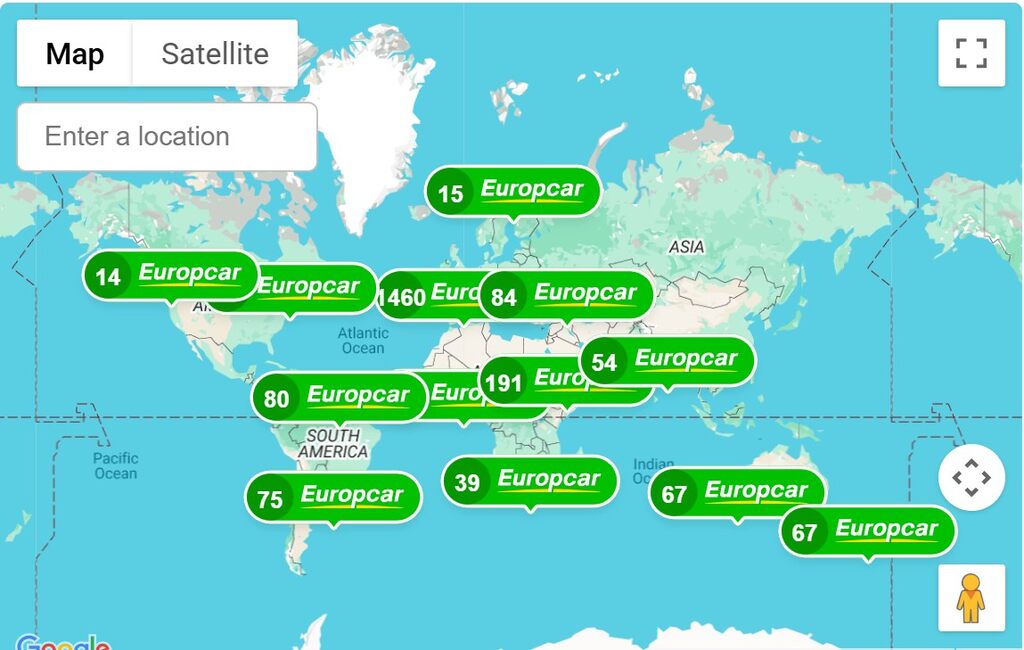
For digital nomads, a car rental company is only as useful as its reach. Europcar operates in over 140 countries with more than 3,500 locations worldwide, which puts it firmly in the same league as Hertz and Avis globally. However, the real advantage lies in its European density. Europcar has an exceptionally strong presence across Western Europe, where it operates in airports, train stations, and city centers simultaneously, making it easy to pick up a rental almost anywhere a nomad might land.
Hertz and Enterprise are notably stronger in North America, where Europcar’s footprint is thinner. If your base is the United States or Canada, Enterprise in particular offers more pickup locations in suburban and rural areas, which matters for long cross-country road trips. Budget and Avis, both owned by the same parent company, also compete effectively in North American markets.
For nomads whose work takes them primarily across Europe, Southeast Asia, the Middle East, or Africa, Europcar is genuinely hard to beat for sheer pickup convenience. It’s not just about having locations, but about having them in the right places. Sixt, while strong in Europe, doesn’t match Europcar’s coverage in Africa and the Asia-Pacific region. For well-traveled nomads bouncing between continents, Europcar’s breadth is a consistent advantage over most mid-tier competitors.
See on:
Pricing Transparency
5
Digital nomads are budget-conscious almost by definition. When comparing Europcar with other rental companies on price, the picture is nuanced. Europcar’s base rates are competitive, particularly for weekly rentals in Europe, where Group A and Group B vehicles frequently come in at EUR 25 to 50 per day when booked in advance. Those rates are broadly comparable with Sixt and slightly below Hertz for equivalent vehicle categories.
Where Europcar shines is in pricing transparency. Unlike Hertz, which has faced criticism for confusing surcharges and mandatory add-ons at the counter, Europcar’s booking interface does a better job of separating the base rate from optional extras. For nomads booking in a hurry from a coworking space or hostel, that clarity reduces the risk of unpleasant surprises at pickup.
Budget and Dollar Rent A Car (a Hertz subsidiary) frequently advertise lower base rates, but nomads report that the actual price paid after fees rarely beats Europcar’s total. Enterprise is consistent and transparent, but it’s not typically the cheapest option outside North America. Avis sits at a similar price point to Europcar with slightly less promotional activity. For nomads willing to book 3-4 weeks ahead, Europcar regularly delivers better value than most of its direct competitors at the same tier.
See on:
Long-Term and Extended Rental Flexibility
4
Digital nomads need vehicles for 10, 20, or even 30 days, and not just a weekend, as they work their way across a region. This is where the choice of rental company really separates the good from the average. Europcar offers dedicated long-term rental programs through its Europcar Mobility Solutions division, with discounted daily rates that kick in after 5 days and deepen further beyond 21 days. For a 30-day rental, the savings over standard rates can be substantial.
For most location-independent workers operating in Europe or Africa, Europcar’s extended rental structure is among the most practical available, combining decent pricing with the ability to modify rental periods online without paying a punishing fee every time your plans shift.
See on:

Easy Digital Booking Experience
3
A nomad’s office is a laptop or a phone, which means the quality of a rental company’s digital platform matters enormously. Europcar’s booking website and mobile app are functional, clean, and mobile-friendly. Searches load quickly, pricing is displayed by category upfront, and the checkout process doesn’t require excessive scrolling or form-filling. For someone booking from a phone in a coffee shop in Porto or a hostel in Bangkok, that usability is genuinely valuable.
Sixt consistently ranks highly for its digital experience and offers a sleek app that nomads frequently praise for its speed and ease of modification. Hertz has improved its platform significantly in recent years, but it still lags behind on mobile responsiveness. Enterprise’s app is reliable for US bookings, but less smooth internationally. Budget’s website is functional but dated.
Europcar’s app, on the other hand, allows you to manage bookings, access digital rental vouchers, and contact support without switching platforms. This might be a small but rather meaningful convenience when you’re coordinating logistics across time zones. It’s not the flashiest platform in the industry, but it works well consistently, and for digital nomads, reliability beats novelty every time. The ability to cancel or modify without calling a hotline is a feature that seasoned nomads specifically look for, and Europcar delivers on it.
See on:
Insurance Options And Flexibility
2
Insurance might just be one of the most confusing and potentially expensive parts of any car rental. For digital nomads who rent cars frequently, finding a company with flexible, fairly priced coverage options is a priority. Europcar offers several insurance tiers: the standard Collision Damage Waiver (CDW), a Premium Protection package that reduces the excess to zero, and a mid-range option that sits between the two. That tiered structure gives nomads a genuine choice rather than a binary accept-or-reject decision.
Hertz offers comparable coverage structures but prices its zero-excess packages more aggressively, often making them feel mandatory rather than optional at the counter. Sixt is transparent about its excess amounts and offers third-party insurance integrations on its platform. Enterprise is consistently rated highly for its insurance clarity, particularly in North America.
Where Europcar has a clear advantage over several competitors is its acceptance of third-party standalone travel insurance, including products like those from World Nomads or digital insurance providers popular with location-independent workers. Its staff is trained to accept valid third-party CDW documentation without pressure. So, for nomads who maintain annual travel insurance policies rather than buying coverage rental by rental, Europcar is a more nomad-friendly option than several competitors at similar price points.
See on:
Loyalty Programs and Repeat Renter Rewards
1
Digital nomads rent cars more often than average travelers, which means a loyalty program can deliver real, compounding value over time. Europcar’s Privilege program is free to join and immediately unlocks member-only pricing. Entry-level Privilege members consistently report discounts of 10-15% on standard rates, with benefits increasing through Privilege Plus and Executive tiers as rental frequency builds. Higher tiers unlock free upgrades, priority counter service, and guaranteed car category availability.
Hertz’s Gold Plus Rewards is arguably the most recognized loyalty program in the car rental industry, offering fast counter bypass and free rental days. However, the points accumulation rate has been criticized as slower than it used to be, and redemption values don’t always match the marketing. Sixt’s loyalty program is newer but gaining traction, particularly in Europe.
Enterprise’s loyalty program (Enterprise Plus) is popular with North American nomads and offers a straightforward earn-and-burn structure. Avis Preferred is solid but not exceptional. For nomads operating primarily in Europe, Europcar’s Privilege program stacks favorably against the competition, especially when combined with partner rewards through affiliated airlines or hotel chains. The ability to layer Privilege discounts on top of promo codes and long-term rental rates means that frequent nomadic renters can build meaningful savings into every trip, not just occasionally.
See on:
Is Europcar cheaper than Hertz for digital nomads on extended road trips?
In most European markets, yes, Europcar’s long-term rental rates and Privilege loyalty discounts typically result in a lower total cost than Hertz for rentals exceeding five days.
Can digital nomads modify or cancel Europcar bookings easily?
Yes, Europcar’s standard rate bookings can be modified or cancelled online without fees in most markets, provided changes are made before the rental period begins.
Does Europcar accept third-party rental insurance from providers popular with digital nomads?
In most markets, Europcar accepts valid third-party CDW documentation, including from providers like World Nomads and standalone travel insurance policies that include rental car coverage. This is particularly relevant for nomads who maintain annual travel insurance policies.
Some images on this article are copyrighted by Europcar.
