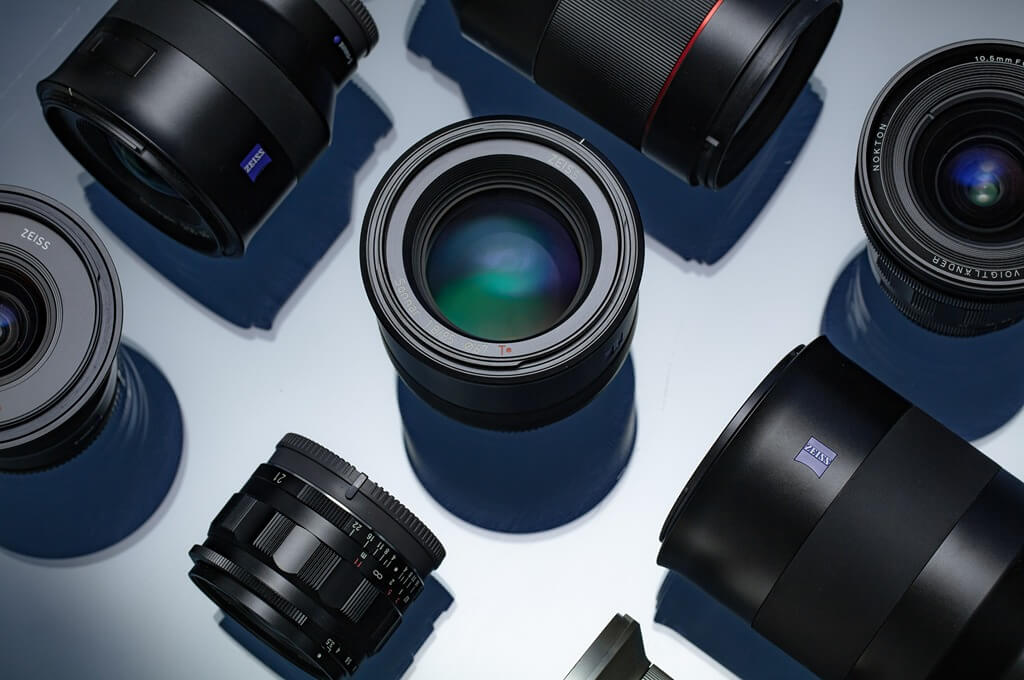
We still remember our panicked packing years earlier, when our camera bag overflowed with all sorts of lenses for different kinds of photography. Over the years, as we perfected our shooting styles, we chose a few all-time classic choices, which we now travel with. However, when the time came to replace a few of them, we didn’t want to break the bank, which is why we decided to invest in used MPB lenses. Buying used lenses not only ensured that we got more bang for our buck, but also, we knew that the performance of the product would never let us down, thanks to the free six-month warranty. Plus, we had a plethora of choices as well, and that too across the “affordable” spectrum, and we had a lot left over in our budget to invest in other photo/video gear as well.
Are you also looking for your first or budget lens and are completely bamboozled by the sheer number of choices and kinds of lenses? That’s why we’ve come up with this guide, where we’ve explained the factors to look for when choosing the best-value lens options for travel photography for your camera. We’ll also mention some fantastic options while we’re at that, too.
Meanwhile, why don’t you start by reading about the best used cameras for travel photography from MPB?
Weight
6
It might not seem that important, but weight is one of the overarching factors when it comes to lenses. Cameras, not so much, because it’s the main body of the photography gear. However, lenses are optional and have choices, which is why weight is an important consideration.
When we went looking for inexpensive lenses on MPB, there was a specific filter for the weight. Here, we had a wide range of choices: less than 150g, 150-250g, 250-500g, 500-750g, 750-1,000g, 1,000-2,000 g, 2000-4,000g, and even ones weighing more than 4,000g! So, we could actually filter by the weight range we didn’t want to exceed before looking for other features in the lenses that filtered up. Fret not; there are so many choices that we never felt that we were compromising on any of the features due to the weight, and you won’t feel it either.
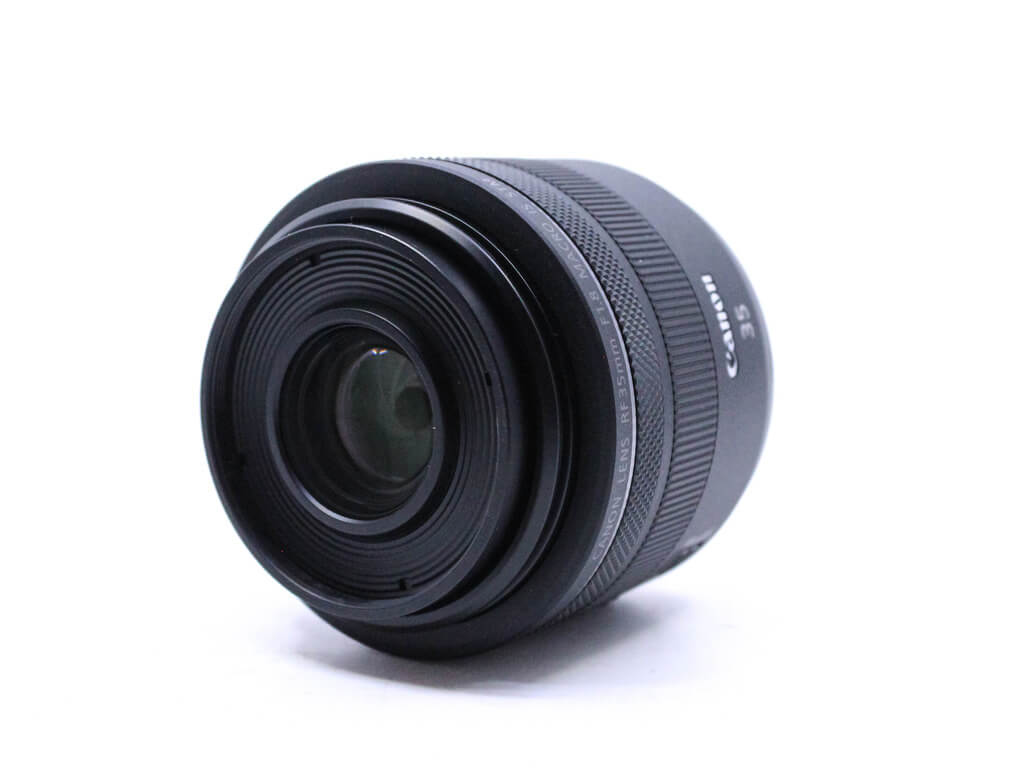
A fantastic, middle-of-the-road lens was the Canon RF 35mm f/1.8 IS STM Macro, which weighed just 305 g. In fact, it was the first affordable prime lens for the Canon R mirrorless camera to hit the market. It’s not surprising, considering it’s available on MPB for USD 380, which is a fantastic deal for an almost-new lens with a six-month warranty, original packaging, and front and rear lens caps. Easy to use, lightweight, and portable, this lens is perfect for close-ups, travel, and street photography.
Buy on:
Cosmetic Condition
5
The next big factor to look at is the “cosmetic condition,” which is one of the most important factors when it comes to choosing photo and video gear from MPB. Since it’s a website involving used gear, it allows buyers, sellers, and traders to choose between five cosmetic conditions: Heavily Used, Well-Used, Good, Excellent, and Like New.
- Heavily used: This has significant signs of wear, such as scuffs and heavy marks across all components, with paint defects, marks, and heavy dust also probably present.
- Well used: These products have light scuffs to components and distinct signs of wear with paint defects, marks, and dust.
- Good: This category of products has noticeable signs of wear to components, with faint paint defects, marks, and dust.
- Excellent: This refers to minor signs of wear to the casing or body with very light paint defects, marks, or dust.
- Like new: These kinds of products are practically right out of the box with little to no sign of wear to the casing or the body. Plus, any defects are minimal.
Every product has these details in its description, so it’s easy to read them and then use your best judgment. Plus, since MPB’s product specialists carefully inspect the appearance and performance of the gear, you can rest assured that the product will be as close to the description as possible.
For instance, this Nikon Nikkor Z 24-70mm f/4 S lens‘ cosmetic condition is “Like New.” It includes the front and rear lens caps, the lens hood, and the standard 12-month warranty, and pairs perfectly with the Nikon Z mirrorless cameras. Light and small, it captures imagery with incredible detail and costs just USD 490.
Buy on:
Aperture/F-Number
4
Aperture, or the F-number, refers to the opening in the lens that controls and quantifies how much light enters it. It’s calculated by dividing the focal length by the effective diameter of the lens.
A larger aperture number (f/8, etc.) means that the aperture is smaller and lets in less light. So, it creates a larger depth of field and keeps everything in focus. The effect is darker images, especially when the atmosphere is very bright, making this feature especially useful on brighter, sun-kissed days. On the other hand, a smaller aperture number (f/2.8, etc.) means that the aperture is wider and lets in more light. Hence, the field of depth is shallower, resulting in blurry backgrounds before and after the focused subjects.
“We loved the original content on the MPB website, which told us everything we needed to know before choosing photography gear, including lenses.”
WOW Travel
A lens particularly excellent for producing exceptional quality images across its aperture range is the Olympus M.Zuiko Digital ED 14-42mm f/3.5-5.6 EZ lens. For a price of USD 170, it’s a steal deal for its wide-angle shooting. Moreover, it’s versatile, lightweight, and compact.
Buy on:

Sensor Size and Crop Factor
3
The image sensor size on a lens indicates the dimensions of the component that transforms the light entering the lens into electrical signals. Basically, this size has a significant impact on the quality and performance of the image. MPB‘s collection primarily lists two types of sensors: APS-C and full-frame ones. Full-frame sensor sizes are the same as 35mm films, feature an extensive lineup of available lenses, and capture images with excellent quality.
There are a few things you need to know before choosing between the two. Firstly, some full-frame camera models have the flexibility of switching between full-frame and APS-C modes automatically. So, you first need to check the specs of your own camera. Secondly, when you attach an APS-C lens to a full-frame camera, it might lead to “vignetting,” which is the obscuring/darkening effect at the corners and edges of the image. On the other hand, attaching full-frame lenses to APS-C cameras will cause it to become more telephoto by approximately 1.5x.
So, it’s important to select lenses that are compatible with the sensor size of your camera.
Buy on:
Type Of Lens
2
There are two main categories of camera lenses: prime and zoom lenses, under which all other types and kinds of lenses are included. Prime lenses have fixed focal lengths and don’t allow zooming in or out, thus providing fixed angles of view. Zoom lenses, on the other hand, provide not only a zoom range but also a range of focal lengths. For example, a 35-70mm zoom lens allows zooming from 35mm all the way to 70mm.
MPB sells a wide variety of specific lens types. Two of the most popular kinds are DSLRs and mirrorless lenses. As the name suggests, mirrorless lenses don’t use mirrors in the camera body. This is different from DSLR lenses, which reflect images using mirrors into electronic viewfinders (EVF) for displaying pictures digitally.
Others include medium format lenses, which are designed for cameras whose sensors are larger than the usual 35mm full-frame ones. They’re usually heavier and larger than smaller sensor cameras and lenses. MPB also has a category for rangefinder lenses, which are specially designed for use with rangefinder cameras and are different from SLR lenses. Also, they typically feature manual focus. Lastly, the website also has cine lenses, a.k.a. cinema lenses, which are specially designed for motion picture production.
The Canon EF-S 17-55mm f/2.8 IS USM lens is a highly recommended, all-purpose APS-C DSLR zoom lens. Not only does it have a larger reach and aperture, but it also features image stabilization!
Buy on:
Brand
1
Last but not in the very least, MPB offers a wide range of camera lens brands for all kinds of photography systems. Some of the most popular brands available on the website include Sony, Canon, Fujifilm, and Nikon. It carries RF, EF, and EF-S mount options for both Canon mirrorless and DSLR cameras, as well as the same for Nikon. When it comes to Sony and Fujifilm, they offer many E-mount and X-mount lens choices for their mirrorless cameras. It also has lenses from Olympus and Panasonic. Furthermore, the website also carries lenses from third-party lens manufacturers, such as Sigma, Lensbaby, Leica, Zeiss, Tamron, Voigtländer, and more.
One of the most popular lenses on the website is the Sony FE 70-200mm f/4 G OSS lens, which is ideal for nature and wildlife photographers. It shoots fantastic and sharp videos and stills even a distance, thanks to the image stabilizer.
Read: MPB Review For Budget-Conscious Travelers.
Buy on:
What is the difference between MPB’s cosmetic conditions “Like New” and “Excellent”?
Items marked “Like new” are as if they’re brand new out of the box, with little to no signs of wear. On the other hand, items marked “Excellent” have minor signs of wear.
Are camera lenses universal?
No, different kinds of camera lenses are compatible with different kinds of cameras, even if they are from the same brands. In order to determine if the lens fits your camera, you need to look at the camera lens mount and choose a lens with the specific mount.
Can we replace the camera lens?
Yes, if lenses have broken or aren’t working properly, they can be replaced. You don’t need to replace the entire camera.
Some images on this article are copyrighted by MPB.
