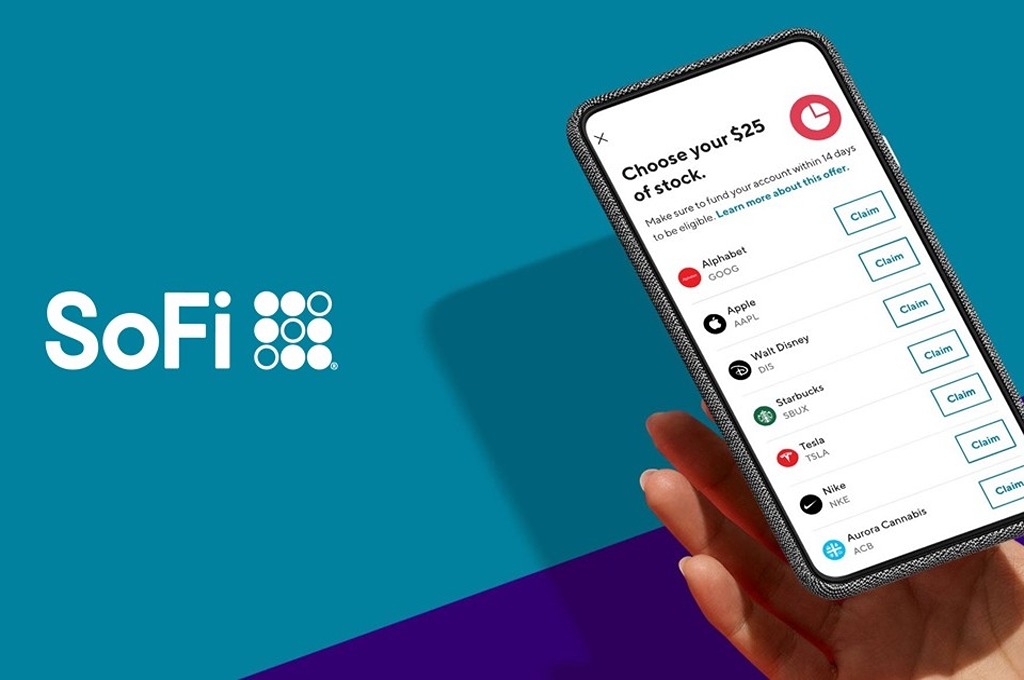
In today’s digital financial landscape, choosing the right online banking and lending platform could feel daunting. SoFi (Social Finance), which was founded in 2011, has quickly emerged as a major player in the personal finance space. Originally a student loan refinancing company, it’s expanded into a full-service financial platform. Now, it offers everything from personal loans and mortgages to investment accounts and banking services. With almost all fintech companies promising better rates, lower fees, and superior customer service, we wondered: Is SoFi legit?
With more than four million members and billions in funded loans, SoFi has certainly made its mark on the industry. In this article, we’re going to delve into everything about SoFi and its offerings, which will help you make an informed decision about your financial future. So, whether you’re considering exploring new investment options, opening a new bank account, or refinancing student loans, read on to know if SoFi is the right fit for you.
Regulatory Status and Financial Backing
When evaluating any financial institution, you need to check whether it’s properly regulated and financially stable. SoFi operates under multiple regulatory frameworks depending on the service, which attests to its legitimacy. What’s more, it also received its national banking charter in 2022. That was a significant milestone in its evolution from a fintech startup to a full-service bank. Moreover, SoFi Bank is federally chartered and regulated by the OCC (Office of the Comptroller of the Currency). In fact, the FDIC has insured its deposits up to USD 250,000 per account per depositor. So, it gives us the same protection we’d receive at traditional banks.
Additionally, SoFi’s lending operations are regulated at both the federal and state levels. Furthermore, SoFi Active and Automated Investing are provided via SoFi Wealth LLC, which is registered with the SEC as an investment advisor. Finally, SoFi’s financial backing is equally impressive. It trades on NASDAQ and its major investors include Third Point Ventures, Silver Lake Partners, and SoftBank. All these lend it an additional layer of legitimacy and accountability.
See on:

Product Range and Service Quality
SoFi’s evolution from a student loan refinancing company to an end-to-end financial services platform has been nothing short of impressive. Today, it offers an extensive range of products and services designed to meet various financial needs for people across different life stages. The lending portfolio includes student loan refinancing, personal loans, home loans, and parent PLUS loans. Interest rates are usually competitive, especially for borrowers with strong credit profiles. In fact, the student loan refinancing program remains one of SoFi’s flagship offerings, beating not only the federal government’s refinancing options but also the rates of traditional lenders.
Moreover, its banking services have gained significant traction, particularly the SoFi Checking and Savings accounts. These accounts offer competitive interest rates, no account fees, and access to a large ATM network. Additionally, the highly-rated banking experience boasts detailed features and an intuitive design comparable to those of traditional banks. Investment services include automated investing (robo-advisor), active trading, retirement planning, and cryptocurrency trading. Furthermore, its automated investing and active trading platforms offer diversified portfolios with competitive management fees and commission-free ETF and stock trading, respectively. Finally, SoFi’s most notable offering is its unique member benefits, including career coaching, financial planning resources, member events, and unemployment protection that temporarily pauses loan payments for eligible members who lose their jobs.
See on:

Customer Experience and Support
Even though experiences can vary across specific products and services, Sofi usually receives high marks for customer experience. We, a mixture of millennials and Gen-Z users, appreciated the user-friendly digital experience.
What we especially loved was the clean interface of the functional SoFi mobile app, available on both Apple and Google app stores. The app allows users to manage all their SoFi products from a single dashboard. Not only can they check credit scores, but also track spending and access educational resources. Plus, customer support was available in the form of phone, email, and live chat. Did we mention that it also has reasonable response times? Yep.
However, one area where SoFi particularly excels is proactive communication. It regularly sends updates about account status, market conditions, and new product offerings. Moreover, the financial wellness resources and educational content are also excellent. Despite the occasional technical glitches, which aren’t unique to SoFi, the overall customer experience is excellent.
See on:
Interest Rates and Fee Structure
In the end, SoFi’s competitive advantage comes down to its attractive interest rates and fee structure. We were impressed by the business model that allows it to offer rates that frequently beat traditional banks and many of its online competitors, too. For instance, SoFi consistently offers rates well above the national average for savings accounts. Moreover, checking accounts also earn interest, which is largely uncommon in the banking industry. That’s probably because SoFi doesn’t maintain expensive branch networks, which means that its overhead costs are lower than those of traditional banks.
SoFi also offers generally competitive options when it comes to lending rates. For instance, its student loan refinancing rates are often lower than federal loan rates, even with borrowers giving up federal benefits and protections. Plus, personal loan rates are competitive for borrowers with strong credit scores and a stable income. However, its fee-free structure is probably its highlight. Not only does it eliminate account maintenance and ATM fees at network ATMs, but it also does away with other traditional banking charges. These include overdraft fees, minimum balance requirements, and even trading commissions for stocks and ETFs.
See on:
Technology and Security Features
Since it’s a digital-first financial platform, SoFi has invested heavily in security measures and tech infrastructure. Its technological capabilities are fantastic, keeping up with the fast-evolving times. Not only are the mobile and web platforms user-friendly, but they also allow users to manage multiple financial products simultaneously. Features such as spending categorization, goal setting, credit score monitoring, and financial planning tools are also user-friendly. Moreover, the technology stack supports real-time notifications, instant transfers, and quick loan applications.
If that wasn’t enough, SoFi’s security measures include the likes of multi-factor authentication, encryption, fraud monitoring, and account alerts. More importantly, it hasn’t experienced any major security breaches, which is critical given the sensitive financial data it handles. Furthermore, SoFi has embraced open banking principles, allowing its users to get an overall and complete financial picture.
All in all, SoFi continues to invest in new technologies, including artificial intelligence for customer service and fraud detection. If that wasn’t enough, it has even expressed interest in blockchain and cryptocurrency technologies.
See on:
Is SoFi safe for investing my money?
Yes, FDIC has insured SoFi Bank up to USD 250,000 per bank, per depositor. So, SoFi provides the same protection as traditional banks.
What credit score do I need to qualify for SoFi products?
Usually, you require good to excellent credit scores for most of SoFi’s products. It generally looks for scores of 680 or higher. However, requirements vary across products and services. For instance, student loan refinancing and personal loans require scores in the 700+ range for the best rates. However, SoFi considers multiple factors and not just credit scores. These include income, employment history, education, and debt-to-income ratio.
Can I use SoFi as my primary bank?
Yes, SoFi could be a primary bank, thanks to its checking and savings account offerings. The accounts include standard banking features such as direct deposit, bill pay, mobile check deposit, and a debit card.
Some images on this article are copyrighted by SoFi.
