
We love discovering new places. What’s even more exciting is finding the next trendy destination before everyone else. We all want to be the first to write about hidden gems or book flights to the next it city before the crowds and prices go up. While many travelers rely on instincts or social media, we have a better tool: Semrush. You might wonder how to use Semrush to find trending destinations. Today is your lucky day because we’re going to show you how.
By using data-driven insights from Semrush, we can eliminate the guesswork and identify travel trends as they emerge. This way, we can keep our content and itineraries ahead of the game.
Start with the Keyword Magic Tool
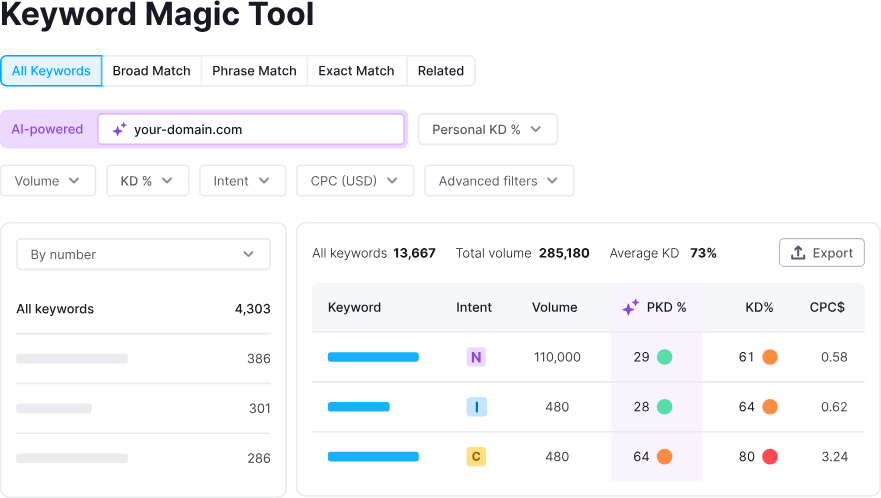
The Keyword Magic Tool is our first resource for discovering what travelers are starting to discuss. We start by entering broad seed keywords like “best places to visit” or “undiscovered islands” and then filter the results to identify specific patterns. By changing the match type to Related, we can find destinations that people are searching for alongside popular spots. This often reveals nearby options that are beginning to gain popularity. For instance, travelers researching Mediterranean trips may suddenly start looking for top things to do in Tel Aviv, signaling a rising destination trend.
Additionally, we also pay close attention to the Trend column. It shows a mini-graph of search interest over the last 12 months. If we see a destination with low overall volume but a sharp, consistent rise in interest over recent months, we know we’ve found a possible winner. This helps us focus on locations that are gaining traction.
See on:
Analyze Seasonal Spikes and Growth
Timing is crucial in travel. We use the Keyword Overview tool to track when interest in a destination starts to rise. By entering a specific country or city, we can examine historical search volume. This is useful for spotting travel interest in destinations or experiences, such as the best day trips from San Diego. This helps us determine if a place is just a fleeting trend or a growing favorite. We look for growth from year to year. If a destination received 20% more searches this month compared to last month, it clearly indicates that the trend is speeding up.
To explore further, we compare these trends across different geographic databases. A destination might be gaining popularity in the UK or Germany, but it may not have caught on in the United States yet. By identifying these regional differences, we can predict what the next big trend will be for our local audience.
See on:

Use Topic Research to Find the “Why”
Once we’ve identified a potential destination, we use the Topic Research tool to understand the specific experiences drawing people there. We enter the destination name, and Semrush generates cards of related subtopics, questions, and headlines. This helps us see if people are suddenly interested in “vacation ideas in winter” or “yoga retreats in the Bahamas,” giving us the context we need to understand the soul of the trend.
We particularly love the Trending toggle in this tool, which highlights subtopics that have seen a significant increase in popularity over the last 60 days. These topics appear with a little flame icon, signaling to us that these are the exact angles we should be covering. By answering the specific questions people are asking, we position ourselves as experts on a destination right as it enters the spotlight.
See on:
Spy on Competitor Traffic Shifts
Sometimes, the best way to find a trend is to see where the big travel players are suddenly getting their traffic. We love to use the Organic Research tool to analyze major travel blogs and booking sites. By looking at their Position Changes, we can see which new keywords they’re starting to rank for. If several top-tier sites suddenly start ranking for a specific, obscure town in Greece, we know they’ve likely identified it as a future hotspot.
We also use the Keyword Gap tool to compare our own content against these industry leaders. We look for the Missing Keywords, terms they rank for that we don’t. Most of the time, these missing terms reveal entire regions or travel styles that are gaining steam. By identifying these gaps early, we can create high-quality content that captures that rising search volume before the competition becomes too fierce.
See on:
Monitor Real-Time Exploding Topics
You can’t answer how to use Semrush to find trending destinations without the Exploding Topics app within the Semrush App Center. This tool is specifically designed to identify trends before they even hit the mainstream search engines in a big way. We filter by the Travel category to see a curated list of destinations, travel tech, and tourism concepts that are showing exponential growth.
The data here is categorized as Exploding, Regular, or Peaked, which helps us avoid wasting time on trends that are already on the way out. When we see a destination tagged as Exploding with a high growth percentage and low competition, we move fast. This approach makes sure that we aren’t just following the news. Instead, we’re the ones making it by being the first to provide in-depth guides for the world’s next favorite places.
See on:
How to find trending keywords on Semrush?
Go to Keyword Overview or Keyword Magic Tool, then enter a topic or seed keyword. Check the Trend graph, search volume changes, and trending filters to spot keywords that are gaining popularity.
Does Semrush have an API for trends?
Yes. Semrush offers a Trends API that lets you pull traffic, audience, and market data from the Semrush Trends into your own systems or dashboards.
How to track SEO in multiple cities with Semrush?
You can do this by using the Position Tracking tool in Semrush and setting different cities for the keywords you want to monitor. Create separate tracking campaigns or add multiple locations to see how your rankings vary by city.
Some images on this article are copyrighted by Semrush.
