We’ve always had a soft spot for gear that actually earns its place in a packed car or a loaded-up backpack. When you’re spending a weekend at a campsite or rolling through a long road trip with a stop-and-cook mentality, the last thing you want is a fire setup that fights back. That’s exactly what drew us to Solo Stove in the first place. The brand has built a reputation over the years for making clean-burning, brilliantly engineered fire products that take the fuss out of outdoor cooking and campfire culture. Whether you’re chasing a quiet night under the stars with a crackling fire pit or cooking a proper meal while backpacking in the middle of nowhere, the brand has a product that fits the moment, and that’s what this Solo Stove review is all about.
However, the real question isn’t just whether Solo Stove looks good on a campsite. It’s whether it actually delivers when the conditions aren’t ideal, when you’re tired from driving, or when the wind picks up unexpectedly. We’ve spent real time with these products across campsites, road trip stopovers, and backyard fire sessions, and what we found was genuinely impressive from start to finish. This review breaks down six key reasons the brand stands out for campers and road trippers alike, with a detailed look at the features that make each product worth considering before your next adventure.
Also read: 13 Best Snacks for Road Trips.
Minimal Ash and Easy Cleanup
5
One of the most underappreciated parts of the Solo Stove experience is how little it leaves behind. Thanks to the efficiency of the 360° airflow combustion system, wood burns much more completely than it would in a conventional fire. That means far less ash accumulating in the base of the fire pit, which makes end-of-night cleanup genuinely quick. The ash that does remain is fine and easy to collect, particularly if you’re using the optional ash pan accessory that catches everything below the burn chamber.
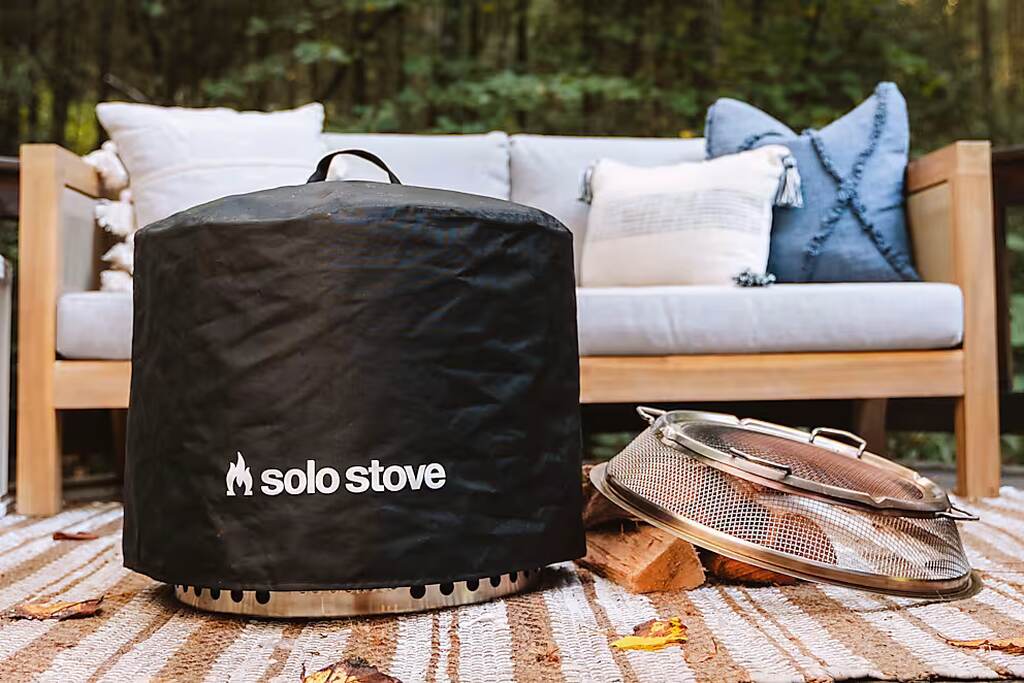
For campers using established campsites with leave-no-trace expectations, this is both practical and responsible. You spend less time digging out ash, less time worrying about residual embers, and less time overall breaking down camp at the end of a session. On road trips where you’re stopping and starting every day or two, the cumulative time saved across a week-long trip adds up meaningfully. We found that three minutes of cleanup was typically all the Bonfire 2.0 required after an evening fire. Now, that’s a far cry from the 15-20 minutes you might spend raking and disposing of ash from a traditional fire ring. The removal lids also double as carry covers, so the whole unit stays clean between uses even when it’s riding around in the back of a vehicle.
See on:
The Solo Stove Pi and Camp Cooking Integration
4
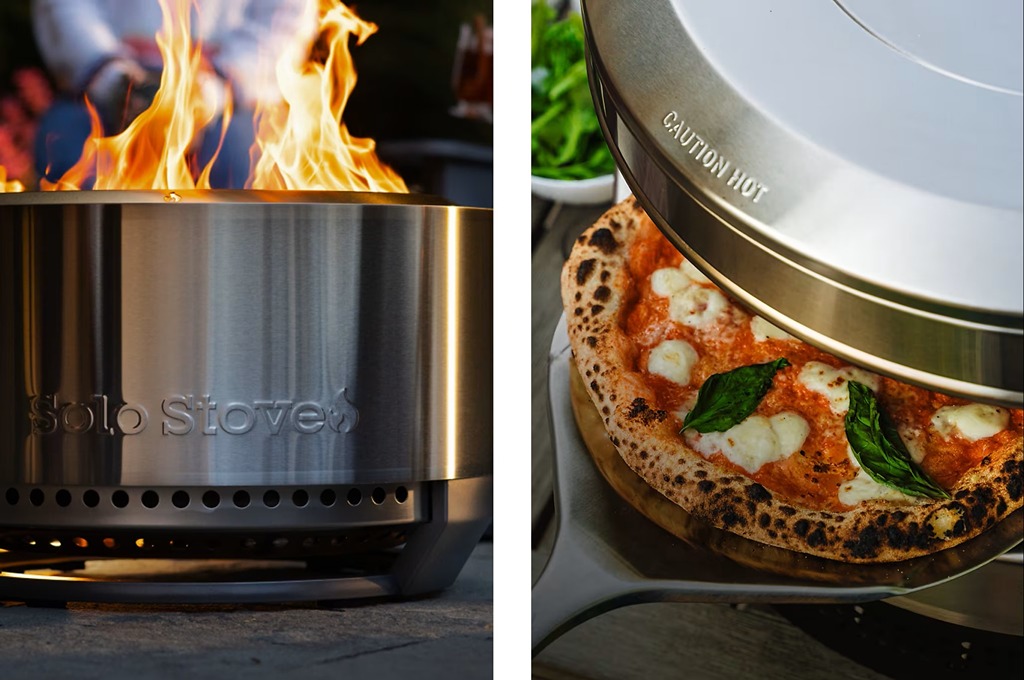
Solo Stove isn’t only a fire pit brand. The Solo Stove Pi pizza oven and the camp cooking accessories that pair with their fire pits significantly expand what you can actually make in the outdoors. The Pi is a wood and gas-powered pizza oven that reaches temperatures of up to 1000°F, capable of cooking a pizza in under two minutes. For road trippers with a bit more gear tolerance and a love of proper food on the road, it’s an extraordinary piece of kit that has very few true competitors at its price point.
The fire pit cooking accessories are equally well thought out. The Bonfire Cooking System includes a grill top, a pot stand, and other attachments that turn any Solo Stove fire pit into a functional camp kitchen. This means you’re not choosing between having a campfire and having a cooking setup. So, you get both from a single piece of gear. For multi-day camping trips where eating well matters to your enjoyment of the trip, this is a big deal. Even something as simple as the cast iron cookware bundle pairs cleanly with the fire pits and produces genuinely great results over the secondary combustion flame. The versatility of the cooking ecosystem is one of the strongest arguments for investing in Solo Stove over a more basic fire setup.
See on:

A Durable Stainless Steel Build Quality
3
Camping and road trip gear takes a beating. It gets rained on, knocked around in a trunk, used on uneven ground, and sometimes neglected between trips. Solo Stove‘s choice to build entirely in 304 stainless steel is not just a cosmetic decision. Hence, it’s a durability commitment that genuinely pays off over time. Stainless steel resists rust, handles extreme heat without warping, and cleans up well even after heavy use. Every Solo Stove fire pit and stove we’ve tested has come out of extended outdoor use looking nearly as good as when it arrived.
The welds on the Bonfire 2.0 and the Ranger are clean and consistent, and the double-wall construction means the outer surface stays cooler than you’d expect given the heat inside the burn chamber. This is a meaningful safety feature for families with kids around the campfire, even if it doesn’t eliminate the need for caution. The stands and accessories, ash pans, shields, and lids, are built to the same standard as the main units. Nothing feels like an afterthought. For road trippers who are loading and unloading gear constantly, the fact that Solo Stove products don’t require careful handling to stay in good condition is a real practical advantage that compounds over months and years of use.
Also read: 13 Best Coolers For Road Trips.
See on:
Compact and Lightweight Models
2
One of the recurring frustrations with camping gear is the weight-to-reward ratio. Something that sounds great in a product listing can quickly become a burden when you’re trying to fit everything into a car, an SUV, or, worse, a backpack. Solo Stove addresses this head-on across its product range. The Lite, their smallest backpacking stove, weighs just 9 ounces and collapses to a size that disappears into any pack. The Mesa tabletop fire pit weighs under 2 lbs, making it perfectly suited for van lifers and road trippers who want a proper fire experience without committing to something that takes up half the trunk.
Even the larger models are designed with portability in mind. The Bonfire 2.0 ships with a carry case and has a side-handle design that makes it easy to move between the campsite and the car. All Solo Stove products are made from 304 stainless steel, which keeps them lightweight while remaining genuinely durable over time. We found that the Mesa, in particular, struck an ideal balance for road trips. Not only was it small enough to carry anywhere, but we could use it at a rest stop or a lakeside campsite. For travelers who count every gram of weight, Solo Stove’s range covers nearly every point on the size-to-output spectrum.
See on:
The Patented 360° Airflow Design
1
Perhaps the single most important thing to understand about Solo Stove products is the engineering. The brand’s signature 360° airflow system pulls air in through bottom vents, channels it up through a double-wall construction, and then releases it as preheated secondary combustion air from holes near the top of the burn chamber. What that means in practice is a far more complete burn than you’d get from a standard campfire or a basic fire ring. Less smoke, more flame, and a noticeably smaller amount of ash left behind when the fire dies down.
For campers, this is a genuine quality-of-life improvement. Smoke constantly shifting direction and getting into your face is one of the most irritating parts of a campfire, and the brand largely eliminates that problem. For instance, the Bonfire 2.0 and the Yukon 2.0, their two largest fire pit models, both run on this system and produce a satisfying, roaring flame that draws people in without driving them away with stinging eyes. On road trips where you’re stopping at campsites after long drives, the last thing you want is a smoky, high-maintenance fire situation. Solo Stove removes most of that friction and lets you actually enjoy the evening.
See on:
Is Solo Stove worth the price for occasional campers?
Yes, for most campers, the investment holds up well even with lighter use. The build quality and lifetime warranty mean you’re buying something that won’t need to be replaced, and the low-maintenance, low-smoke experience makes even occasional trips more enjoyable.
Can you use Solo Stove fire pits in dry or fire-restricted areas?
This depends on the specific regulations of the area you’re visiting. Many fire-restricted zones allow gas fire pits or contained fires with no open-flame sparks. Solo Stove fire pits burn wood and are not inherently exempt from fire bans, so you’ll need to check local rules before use.
How long does it take to get a Solo Stove fire going?
With proper kindling and dry wood, a Solo Stove fire pit can reach a full, steady burn in under five minutes. The airflow system encourages ignition and sustains flame well even in mildly damp conditions. Using fire starters or Solo Stove’s own branded starters speeds the process up further, making it one of the fastest-starting fire setups available for campers.
Some images on this article are copyrighted by Solo Stove.
