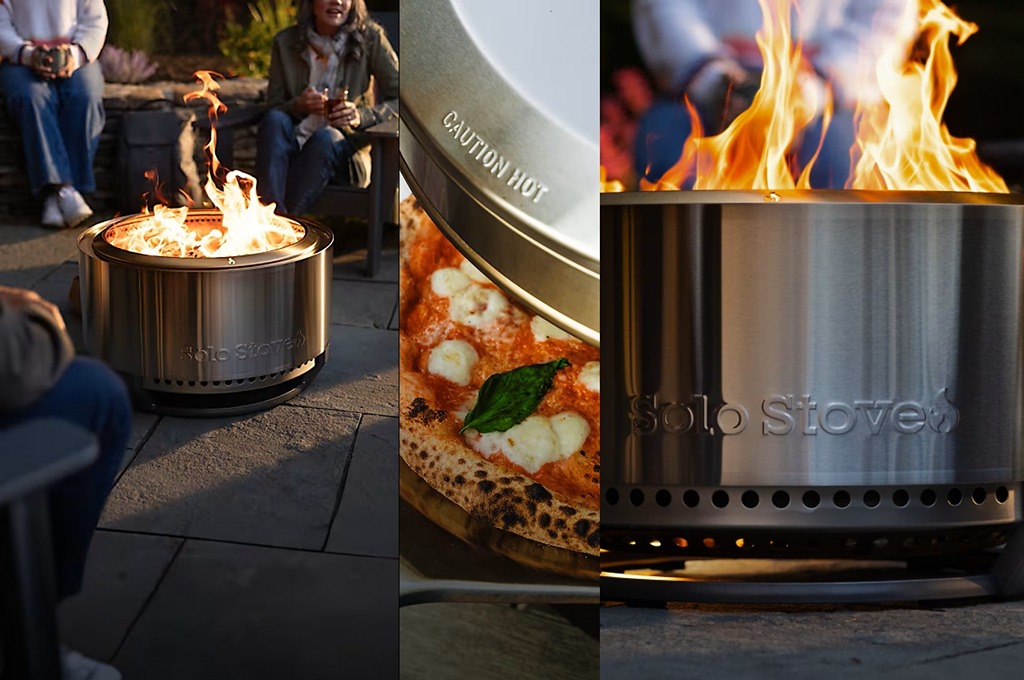
There’s a certain kind of traveler who never really stops moving. Road trippers who pull off at a mountain pass just to make coffee. Backpackers who’ve learned to build their entire kit around weight and efficiency. Car campers who want a proper fire after a long day on the trail. What all of these people share is a low tolerance for gear that creates more problems than it solves. That’s exactly where Solo Stove has carved out a well-earned reputation over the years. Whether it’s fire pits, camp stoves, or outdoor cooking gear, Solo Stove for travelers works brilliantly without demanding much. The engineering is sophisticated, but the experience it delivers is refreshingly simple.
We’ve spent time with Solo Stove products across a range of adventure settings, from desert car camps to coastal backpacking trips to weekend road trip stopovers with a fire going in under five minutes. However, what keeps coming back to us is how consistently these products remove friction from the outdoor experience. You’re not fighting with your gear. You’re enjoying the place you drove or hiked to get to. That’s a harder thing to engineer than it sounds, and it’s the core reason Solo Stove deserves serious consideration from any adventure traveler who wants reliable, low-fuss performance in the field.
Also read: The Best Camping Lights and Lanterns.
A Smoke-Free Adventure
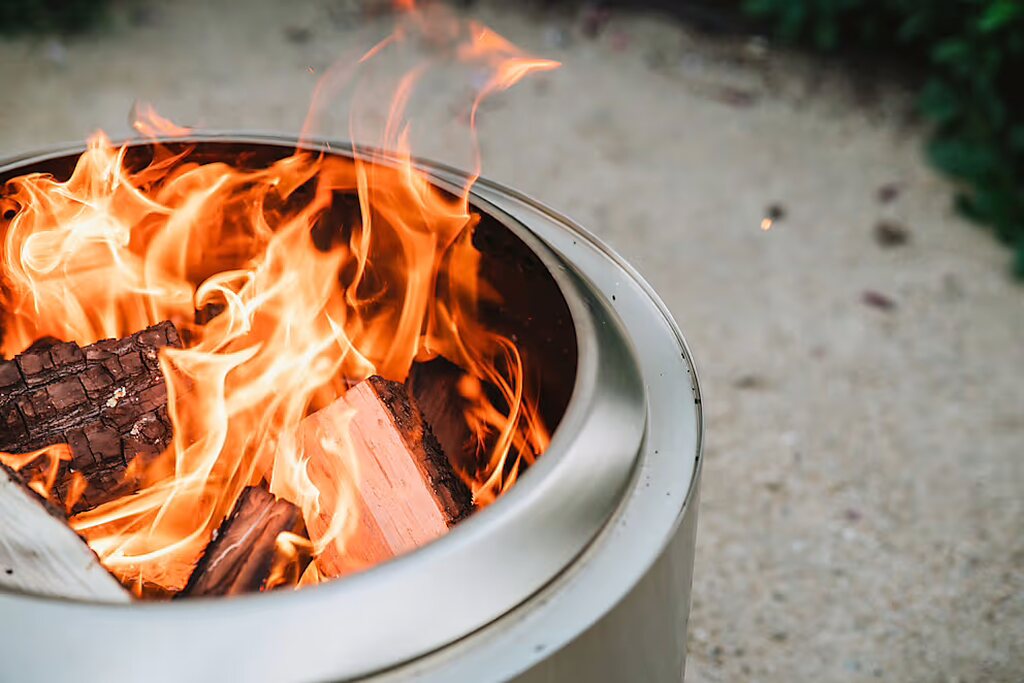
Ask any experienced camper what annoys them most about sitting around a fire, and smoke will come up almost every time. The shifting, eye-stinging drift of a poorly burning fire is one of the most persistent frustrations of outdoor life, and it’s something most fire products simply accept as unavoidable. Solo Stove doesn’t. The brand’s patented double-wall combustion design pulls fresh air through bottom vents, heats it as it travels up between the walls, and then feeds it back into the burn chamber as preheated secondary air. The result is a secondary combustion effect that burns off gases and particulates before they can escape as smoke.
In practice, this means sitting around a Solo Stove fire is a noticeably different experience from a conventional campfire. Your eyes stay clear, your clothes stay fresher, and the fire produces a tall, clean flame that looks as good as it performs. For adventure travelers who are spending consecutive nights outdoors and living out of the same gear, not soaking everything in smoke has real quality-of-life benefits that accumulate quickly. The Bonfire 2.0 and the Ranger both deliver this effect consistently, even in light wind, and the secondary combustion is visible as a satisfying ring of flame at the top of the burn chamber.
See on:
A Wide Product Range
One of the genuinely impressive things about Solo Stove as a brand is how comprehensively its lineup addresses the different needs of different kinds of travelers. There isn’t a single product designed to do everything adequately. Instead, there’s a thoughtfully scaled range that lets you match the right tool to your specific travel style without having to settle for something that almost fits.
For ultralight backpackers, the Solo Stove Lite weighs just 9 oz. and packs down small enough to disappear into any kit. Are you a solo traveler or a road-tripping duo who wants a campfire without committing to a large fire pit? The Mesa tabletop fire pit delivers a real flame experience at under 2 lbs. For group car campers and overlanders, the Bonfire 2.0 provides a full-size fire pit that fits 16-inch logs and produces enough heat to gather six or eight people comfortably around it. Finally, for travelers who want the largest possible output at a basecamp, the Yukon 2.0 handles logs up to 20 inches and creates a fire presence that genuinely anchors a campsite.
See on:
A Durable, Long-Lasting Build
The stainless steel construction across the entire Solo Stove lineup isn’t a cosmetic choice. It’s a functional one. 304 stainless steel resists rust, handles repeated cycles of intense heat without warping or degrading, and cleans up well even after extended outdoor use. For adventure travelers who subject their gear to real-world conditions across many trips and many seasons, this kind of material quality compounds into a significant long-term advantage.
What’s equally impressive is the consistency of the build across different price points in the range. The welds are clean and precise on every model, the double-wall construction fits together tightly with no flex or rattle, and the accessories, including the ash pan, the carry case, and the shield, are manufactured to the same standard as the main units. Nothing about the product feels like a cost-saving shortcut. For travelers who load and unload their gear dozens of times per season, the fact that Solo Stove products don’t require careful handling to stay in good condition is a practical advantage that becomes more apparent over time. The lifetime warranty the brand offers reinforces this, giving buyers genuine confidence that a Solo Stove product is a one-time purchase rather than something that will need replacing after 3 or 4 seasons of active use.
See on:

Easy Cleanup
Post-fire cleanup is one of those camp tasks that sounds minor until you’re tired, it’s cold, and you still need to pack out by morning. Traditional fire rings and cheap fire pits can leave behind significant amounts of ash that need to be raked, doused, and disposed of responsibly, particularly at leave-no-trace campsites where you’re expected to pack out what you leave behind. Solo Stove‘s efficient combustion system changes this significantly.
Because wood burns so completely in the 360° airflow chamber, the ash residue left after a full evening fire is fine and minimal. The optional ash pan accessory slides into the base of the fire pit and collects everything that falls through the burn grate, turning cleanup into a single, quick removal and empty. We consistently found that the Bonfire 2.0 needed fewer than 5 minutes of cleanup after an evening fire, compared to the 15 to 20 minutes a comparable conventional fire ring would typically require. On a road trip with stops at 10 or 12 different campsites over 2 weeks, that time saving added up to hours of recovered time for us. The carry lid also keeps the interior clean during transport, so the unit arrives at each new campsite ready to use without needing to be cleared out first.
See on:
Cooking Accessories
Solo Stove‘s identity has expanded well beyond fire pits, and for adventure travelers who take their camp cooking seriously, that expansion matters. The brand now offers a cooking ecosystem that integrates directly with its fire pits and transforms them from purely atmospheric pieces of gear into fully functional outdoor kitchens. The Bonfire Cooking System includes a grill top and pot stand that attach to the fire pit and sit at the right height for comfortable camp cooking over the secondary combustion flame.
The cast iron cookware bundle pairs naturally with the system and handles everything from morning eggs to seared meat to one-pan pasta dinners with the kind of consistent heat performance that’s hard to replicate over a conventional open flame. For road trippers and car campers who want to eat well rather than just eat, this setup removes the need to carry a separate camp stove alongside your fire pit. The Solo Stove Pi pizza oven pushes the concept even further, reaching temperatures up to 1,000°F and delivering wood-fired pizza in under 2 minutes. Furthermore, if you’re a food-focused traveler who wants proper results at a campsite, there’s nothing else at the Pi’s price point that competes. The best bit, though, is that the cooking ecosystem turns Solo Stove from a great fire product into an argument for leaving most other camp cooking gear at home.
See on:
Which Solo Stove model is best for a first-time buyer who camps and road trips?
For most first-time buyers who split their time between road trips and car camping, the Ranger is the most versatile starting point. It’s compact enough to travel well without a dedicated vehicle setup, large enough to produce a satisfying group fire, and priced in a range that investors feel is reasonable before you’ve committed to the full ecosystem. If weight and portability are the top priorities, the Mesa is worth considering as a lighter alternative that still delivers the brand’s signature low-smoke experience.
Also read: Solo Stove Review For Camping And Road Trips.
Can we use Solo Stove fire pits on a wooden deck or a picnic table?
Solo Stove recommends using a stand with all fire pit models when you place them on any surface that radiant heat could possibly damage. The brand sells purpose-built stands for each fire pit size that elevate the unit and protect the surface below. Even with the stand in place, using the fire pit on a wooden deck requires care and attention. On a concrete pad, gravel, or bare ground, the stand-alone provides sufficient clearance for most conditions.
Some images on this article are copyrighted by Solo Stove.
